« Bracelet d'aide à l'habillage - SeWith » : différence entre les versions
mAucun résumé des modifications |
m Meven a déplacé la page Bracelet d'aide à l'habillement - SeWith vers Bracelet d'aide à l'habillage - SeWith : Titre mal orthographié |
||
| (11 versions intermédiaires par le même utilisateur non affichées) | |||
| Ligne 3 : | Ligne 3 : | ||
|status=Concept | |status=Concept | ||
|artistique=Non | |artistique=Non | ||
|description=Un bracelet qui facilite l' | |description=Un bracelet qui facilite l'habillage en retenant les manches d'un sous pull. | ||
|license=Creative Commons Attribution CC-by-nc-sa-3.0 France | |license=Creative Commons Attribution CC-by-nc-sa-3.0 France | ||
|contributeurs=Julie, Ilaria, Simone, Jean-Marie, Michelle | |contributeurs=Julie, Ilaria, Simone, Jean-Marie, Michelle | ||
|ingrédients=textile, élastique | |ingrédients=textile, élastique | ||
}} | }} | ||
Cet objet a été réalisé dans le cadre de workshops consacrés au co-design de vêtements adaptés avec des personnes en situation de handicap, dans le cadre du projet [https://info.pingbase.net/sewith/ SeWith]. | |||
= VERSION FRANÇAISE = | = VERSION FRANÇAISE = | ||
| Ligne 22 : | Ligne 24 : | ||
Un bracelet semi-rigide (type bracelet fluo de vélo) muni d'un anneau et pouvant être accroché avec un doigt : Une fois enroulé sur la manche, le bracelet appuie et maintient la manche du sous-pull en place. Une fois le sweat mis, le bracelet est retiré en étant tiré par l'anneau. | Un bracelet semi-rigide (type bracelet fluo de vélo) muni d'un anneau et pouvant être accroché avec un doigt : Une fois enroulé sur la manche, le bracelet appuie et maintient la manche du sous-pull en place. Une fois le sweat mis, le bracelet est retiré en étant tiré par l'anneau. | ||
Avant l | Avant l'utilisation suivante, le bracelet peut être déroulé et maintenu droit à l'aide d'un dispositif attaché à un accoudoir de fauteuil roulant à l'aide d'aimants. | ||
[[File:7b86c4c3-964d-497f-9fb3-bfff14ef8e21.png|400px]] | |||
=== Feedback de Jean‑Marie – premier test non concluant === | === Feedback de Jean‑Marie – premier test non concluant === | ||
| Ligne 31 : | Ligne 35 : | ||
Le prototype est une sangle à boucles, ouvrable largement, retenue par un anneau extérieur afin que Jean‑Marie n’ait pas à « assembler » la sangle pour la passer. L’anneau extérieur bloque la sangle de façon permanente. La sangle est ajustée à la circonférence du poignet de Jean‑Marie, tout en offrant une large ouverture pour traverser des tissus épais. Les anneaux sont assez grands pour laisser passer un doigt, notamment le pouce. La longueur totale de la sangle reste limitée afin d’éviter de grands mouvements lors du serrage, compte tenu de l’amplitude réduite de Jean‑Marie. | Le prototype est une sangle à boucles, ouvrable largement, retenue par un anneau extérieur afin que Jean‑Marie n’ait pas à « assembler » la sangle pour la passer. L’anneau extérieur bloque la sangle de façon permanente. La sangle est ajustée à la circonférence du poignet de Jean‑Marie, tout en offrant une large ouverture pour traverser des tissus épais. Les anneaux sont assez grands pour laisser passer un doigt, notamment le pouce. La longueur totale de la sangle reste limitée afin d’éviter de grands mouvements lors du serrage, compte tenu de l’amplitude réduite de Jean‑Marie. | ||
[[File:b74ac1b2-986d-47a3-8ecc-1868cecdb98a.png|400px]] | |||
== Machines et matériaux utilisés == | == Machines et matériaux utilisés == | ||
| Ligne 47 : | Ligne 53 : | ||
Pour fabriquer le prototype 3, on désassemble d’abord le prototype 2 de Michelle. | Pour fabriquer le prototype 3, on désassemble d’abord le prototype 2 de Michelle. | ||
<gallery> | |||
18a8c493-2044-41c8-87d4-b12b9ad9c93d.jpg | |||
784d98bd-bf54-4683-b810-07d785488409.jpg | |||
</gallery> | |||
On raccourcit aux dimensions indiquées par Jean‑Marie et Michelle. | On raccourcit aux dimensions indiquées par Jean‑Marie et Michelle. | ||
[[File:e46204da-5f69-4d1f-bf08-19d4e9d885af.jpg| | [[File:e46204da-5f69-4d1f-bf08-19d4e9d885af.jpg|400px]] | ||
On ré‑assemble. | On ré‑assemble. | ||
[[File:d549e412-0d12-4b14-9125-4c0d5a926f18.jpg| | [[File:d549e412-0d12-4b14-9125-4c0d5a926f18.jpg|400px]] | ||
On teste le troisième prototype. Celui-ci comporte deux bracelets, un pour chaque bras, car les deux manches doivent être bloquées pour passer le pull. | |||
Questionnements sur le premier bracelet : | |||
* La grande boucle est‑elle trop lourde et risque‑t‑elle de tomber dans le fond de la manche ? Son poids pourrait toutefois aider à extraire la sangle. | * La grande boucle est‑elle trop lourde et risque‑t‑elle de tomber dans le fond de la manche ? Son poids pourrait toutefois aider à extraire la sangle. | ||
* Quelle est la facilité à libérer la sangle de la manche une fois le pull passé, surtout avec plusieurs couches de pull/sweat ? | * Quelle est la facilité à libérer la sangle de la manche une fois le pull passé, surtout avec plusieurs couches de pull/sweat ? | ||
Avec un second test réalisé par une autre personne, on constate que la grande boucle peut s’enrouler autour du pouce lors du passage du pull, ce qui garde la sangle accessible pour libérer le bracelet. | Avec un second test réalisé par une autre personne, on constate que la grande boucle peut s’enrouler autour du pouce lors du passage du pull, ce qui garde la sangle accessible pour libérer le bracelet. | ||
<gallery> | |||
bbacb14e-8c7a-4d41-8fe6-4a4a0616db61.jpg | |||
c018d233-18b5-4fbf-8313-8f7953e93c22.jpg | |||
</gallery> | |||
On fabrique le second bracelet pour l’autre main en profitant d'une seconde sangle, plus légère (boucles en TPU et sangles plus fines). | |||
<gallery> | |||
a8817712-ebd6-4cc7-bcfa-6b413bfa1b9a.jpg | |||
8d7f9476-c0c8-4be9-b09b-2a1ec1c7e4e1.jpg | |||
</gallery> | |||
=== Réalisation des boucles === | |||
En parallèle, on teste deux méthodes pour réaliser les boucles : en métal façonné à la main ou en impression 3D. | |||
==== En métal ==== | |||
<gallery> | |||
3a6604ad-16bd-4d1c-835a-b048e8f470c1.jpg | |||
f3f7f78c-36bc-48f6-9a5e-a07ab0239b80.jpg | |||
ed5d3ab0-93dd-4ae3-89e9-376be7daed06.jpg | |||
0d7627b3-0d20-405b-8d69-cf7a437ea312.jpg | |||
03344326-34a9-4b79-9986-6ab27e6b06f6.jpg | |||
</gallery> | |||
==== En | ==== En TPU (impression 3D) ==== | ||
<gallery> | |||
346648ce-863d-4b07-b547-1b272a0b0a27.jpg | |||
54d2e14f-5c02-4d12-882c-d2fb0be48054.jpg | |||
6d04b8b1-2328-4c8e-97af-5d3bbbd1462c.jpg | |||
</gallery> | |||
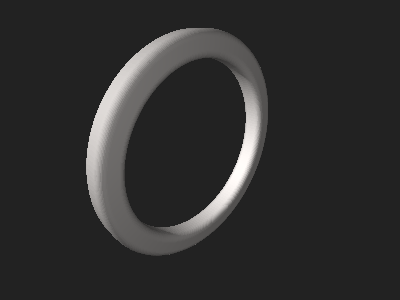
*Bracelet 2 :* la grande boucle qui termine la sangle et bloque le bracelet était initialement en TPU, mais lorsqu’on tire pour le retirer sous le pull (opération assez difficile et nécessitant de la force), la boucle flexible sortait de la forme rectangulaire. On la remplace donc par une boucle moins souple, toujours en TPU pour conserver la légèreté. | *Bracelet 2 :* la grande boucle qui termine la sangle et bloque le bracelet était initialement en TPU, mais lorsqu’on tire pour le retirer sous le pull (opération assez difficile et nécessitant de la force), la boucle flexible sortait de la forme rectangulaire. On la remplace donc par une boucle moins souple, toujours en TPU pour conserver la légèreté. | ||
Fichier 3D au format .STL de l'anneau : | |||
[[file:01_ring.stl|400px]] | |||
=== Test du bracelet 2 === | === Test du bracelet 2 === | ||
<gallery> | |||
32175fac-b369-4d49-a404-979f31916929.jpg | |||
40f9f957-b26b-4c43-ac39-2aa262bb65f7.jpg | |||
9a51856d-6787-4933-ad12-cd61778a2faa.jpg | |||
81b8a55f-e413-4f41-a308-34c2efbd8c25.jpg | |||
aa6ab2fd-00fd-4eea-9d8e-c1bd33fc8a1b.jpg | |||
1ec8bc5e-6e2a-4e78-8f48-6decad193ae2.jpg | |||
1d34c4d8-be9c-4847-89cf-11eccb3875cf.jpg | |||
5d4bb7a3-3fd4-4cd3-870b-9c547f02bd98.jpg | |||
26098b40-953d-4775-a63e-b8e475c4ad71.jpg | |||
2fa4a492-118a-4b7e-8392-3f1971c67729.jpg | |||
b2bff060-0a06-4400-9433-29a579b2badd.jpg | |||
a56510b6-f1ee-4a2b-a4a9-596773bec44f.jpg | |||
</gallery> | |||
== Tips, remarks, conclusions… == | == Tips, remarks, conclusions… == | ||
Pour personnaliser un peu le bracelet et ajouter une touche esthétiques, nous nous essayons à la broderie. | |||
=== Finition personnalisée en broderie === | === Finition personnalisée en broderie === | ||
Broderie numérique : difficile sur la sangle ! | |||
[[File:7243c241-14d6-45c9-a983-edbfc64d6bf2.jpg|400px]] | |||
Broderie à la main : plus simple ;-) | |||
[[File:a086a149-ac5d-4646-ae7c-155f43d73558.jpg|400px]] | |||
== Produit fini == | == Produit fini == | ||
=== Bracelet 1 === | === Bracelet 1 === | ||
[[File:05257c0b-3125-4a7d-984d-ed09ea4787e8.jpg | |||
[[File:05257c0b-3125-4a7d-984d-ed09ea4787e8.jpg|400px]] | |||
=== Bracelet 2 === | === Bracelet 2 === | ||
[[File:8d3e67b7-d928-4e9c-b3f3-749a6ad531fd.jpg|thumb| | |||
[[File:8d3e67b7-d928-4e9c-b3f3-749a6ad531fd.jpg|400px]] | |||
= ENGLISH VERSION = | |||
== Initial brief == | |||
In one sentence: a tool that enables autonomous dressing. | |||
Detailed brief: a compact, low‑friction device that lets the arm glide smoothly into sleeves using the motion of the biceps or elbow—without needing to grasp or finely control the fingers. It reduces fabric‑to‑skin friction, turning the act of dressing into a fluid, effortless movement. | |||
== Inspirations == | |||
=== First concept === | |||
A semi‑rigid bracelet (similar to a fluorescent bike bracelet) equipped with a ring and capable of being hooked with a finger : once wrapped around the sleeve, the bracelet presses against and holds the undershirt sleeve in place. After the sweater is on, the bracelet is removed by pulling it off the ring. Before the next use, the bracelet can be unwound and kept straight using a device attached to a wheelchair armrest with magnets. | |||
[[File:7b86c4c3-964d-497f-9fb3-bfff14ef8e21.png|400px]] | |||
=== Feedback from Jean‑Marie – first test not conclusive === | |||
He finds it difficult to “throw” the band so that it adheres. However, the same system using a slightly elastic Velcro strap that he can place on his arm and tighten with his teeth or the other hand works (he already uses this principle to bring his legs together and slip under a sheet). | |||
== Short description of the second prototype made by Michelle == | |||
The prototype is a widely opening strap, retained by an outer ring so that Jean‑Marie does not have to “assemble” the strap to pass it through. The outer ring locks the strap permanently. The strap is sized to Jean‑Marie’s wrist circumference while still offering a large opening to pass thick fabrics. The rings are big enough to allow a finger—especially the thumb—to pass through. The overall length of the strap remains limited to avoid large movements when tightening, given Jean‑Marie’s reduced range of motion. | |||
[[File:b74ac1b2-986d-47a3-8ecc-1868cecdb98a.png|400px]] | |||
== Machines and materials used == | |||
* Sewing machine | |||
* 3D printing in TPU (same material as the cuff loops) | |||
* Hand‑crafted metal loops made from a heated rod | |||
* Straps of various sizes | |||
* TPU plastic | |||
* Metal loops | |||
== Project implementation instructions, step by step == | |||
=== Making the strap === | |||
To build prototype 3, we first disassemble Michelle’s prototype 2. | |||
<gallery> | |||
18a8c493-2044-41c8-87d4-b12b9ad9c93d.jpg | |||
784d98bd-bf54-4683-b810-07d785488409.jpg | |||
</gallery> | |||
We cut it to the dimensions indicated by Jean‑Marie and Michelle. | |||
[[File:e46204da-5f69-4d1f-bf08-19d4e9d885af.jpg|400px]] | |||
We re‑assemble it. | |||
[[File:d549e412-0d12-4b14-9125-4c0d5a926f18.jpg|400px]] | |||
We test the third prototype. This version has two bracelets, one for each arm, because both sleeves must be held to pull the sweater through. | |||
Questions about the first bracelet: | |||
* Is the large loop too heavy and likely to fall to the bottom of the sleeve? Its weight could, however, help extract the strap. | |||
* How easy is it to release the strap from the sleeve once the sweater is on, especially with multiple layers of sweater/jacket? | |||
In a second test performed by another person, we observed that the large loop can wrap around the thumb during sweater insertion, keeping the strap accessible for releasing the bracelet. | |||
<gallery> | |||
bbacb14e-8c7a-4d41-8fe6-4a4a0616db61.jpg | |||
c018d233-18b5-4fbf-8313-8f7953e93c22.jpg | |||
</gallery> | |||
We fabricate the second bracelet for the other hand using a second, lighter strap (TPU loops and thinner straps). | |||
<gallery> | |||
a8817712-ebd6-4cc7-bcfa-6b413bfa1b9a.jpg | |||
8d7f9476-c0c8-4be9-b09b-2a1ec1c7e4e1.jpg | |||
</gallery> | |||
=== Making the loops === | |||
In parallel, we test two methods for producing the loops: hand‑shaped metal or 3D‑printed. | |||
==== In metal ==== | |||
<gallery> | |||
3a6604ad-16bd-4d1c-835a-b048e8f470c1.jpg | |||
f3f7f78c-36bc-48f6-9a5e-a07ab0239b80.jpg | |||
ed5d3ab0-93dd-4ae3-89e9-376be7daed06.jpg | |||
0d7627b3-0d20-405b-8d69-cf7a437ea312.jpg | |||
03344326-34a9-4b79-9986-6ab27e6b06f6.jpg | |||
</gallery> | |||
==== In TPU (3D printing) ==== | |||
<gallery> | |||
346648ce-863d-4b07-b547-1b272a0b0a27.jpg | |||
54d2e14f-5c02-4d12-882c-d2fb0be48054.jpg | |||
6d04b8b1-2328-4c8e-97af-5d3bbbd1462c.jpg | |||
</gallery> | |||
Bracelet 2: the large loop that finishes the strap and locks the bracelet was initially printed in TPU, but when pulled to remove it under the sweater (a fairly difficult operation requiring force), the flexible went throught the rectangular shape. We therefore replaced it with a less flexible loop, still made of TPU to retain lightness. | |||
3D File of the ring in .STL format : | |||
[[file:01_ring.stl|400px]] | |||
=== Test of bracelet 2 === | |||
<gallery> | |||
32175fac-b369-4d49-a404-979f31916929.jpg | |||
40f9f957-b26b-4c43-ac39-2aa262bb65f7.jpg | |||
9a51856d-6787-4933-ad12-cd61778a2faa.jpg | |||
81b8a55f-e413-4f41-a308-34c2efbd8c25.jpg | |||
aa6ab2fd-00fd-4eea-9d8e-c1bd33fc8a1b.jpg | |||
1ec8bc5e-6e2a-4e78-8f48-6decad193ae2.jpg | |||
1d34c4d8-be9c-4847-89cf-11eccb3875cf.jpg | |||
5d4bb7a3-3fd4-4cd3-870b-9c547f02bd98.jpg | |||
26098b40-953d-4775-a63e-b8e475c4ad71.jpg | |||
2fa4a492-118a-4b7e-8392-3f1971c67729.jpg | |||
b2bff060-0a06-4400-9433-29a579b2badd.jpg | |||
a56510b6-f1ee-4a2b-a4a9-596773bec44f.jpg | |||
</gallery> | |||
== Tips, remarks, conclusions… == | |||
To give the bracelet a personal touch and add aesthetic flair, we experimented with embroidery. | |||
=== Custom embroidered finish === | |||
Digital embroidery: it was difficult on the strap because of the thickness ! | |||
[[File:7243c241-14d6-45c9-a983-edbfc64d6bf2.jpg|400px]] | |||
Hand embroidery: much simpler ;-) | |||
[[File:a086a149-ac5d-4646-ae7c-155f43d73558.jpg|400px]] | |||
== Finished product == | |||
=== Bracelet 1 === | |||
[[File:05257c0b-3125-4a7d-984d-ed09ea4787e8.jpg|400px]] | |||
=== Bracelet 2 === | |||
[[File:8d3e67b7-d928-4e9c-b3f3-749a6ad531fd.jpg|400px]] | |||
Dernière version du 5 décembre 2025 à 12:01
Un bracelet qui facilite l'habillage en retenant les manches d'un sous pull.

Description du projet
Un bracelet qui facilite l'habillage en retenant les manches d'un sous pull.
Cet objet a été réalisé dans le cadre de workshops consacrés au co-design de vêtements adaptés avec des personnes en situation de handicap, dans le cadre du projet SeWith.
VERSION FRANÇAISE
Brief initial
En une phrase : Un outil qui facilite l'habillage en autonomie
Brief détaillé : Un dispositif compact à faible frottement qui laisse le bras glisser doucement dans les manches grâce au mouvement du biceps ou du coude — sans besoin de saisir ni de contrôler finement les doigts. Il réduit le frottement tissu‑peau, transformant le geste d’habillage en un mouvement fluide et sans effort.
Inspirations
Premier concept
Un bracelet semi-rigide (type bracelet fluo de vélo) muni d'un anneau et pouvant être accroché avec un doigt : Une fois enroulé sur la manche, le bracelet appuie et maintient la manche du sous-pull en place. Une fois le sweat mis, le bracelet est retiré en étant tiré par l'anneau. Avant l'utilisation suivante, le bracelet peut être déroulé et maintenu droit à l'aide d'un dispositif attaché à un accoudoir de fauteuil roulant à l'aide d'aimants.

Feedback de Jean‑Marie – premier test non concluant
Il lui est difficile de « jeter » la bande afin qu’elle adhère. En revanche, le même système avec une bande Velcro légèrement élastique, qu’il peut placer sur son bras et serrer avec ses dents ou l’autre main, fonctionne (il utilise déjà ce principe pour rapprocher ses jambes et se glisser sous le drap).
Description courte du second prototype réalisé par Michelle
Le prototype est une sangle à boucles, ouvrable largement, retenue par un anneau extérieur afin que Jean‑Marie n’ait pas à « assembler » la sangle pour la passer. L’anneau extérieur bloque la sangle de façon permanente. La sangle est ajustée à la circonférence du poignet de Jean‑Marie, tout en offrant une large ouverture pour traverser des tissus épais. Les anneaux sont assez grands pour laisser passer un doigt, notamment le pouce. La longueur totale de la sangle reste limitée afin d’éviter de grands mouvements lors du serrage, compte tenu de l’amplitude réduite de Jean‑Marie.

Machines et matériaux utilisés
- Machine à coudre
- Impression 3D en TPU (même matériau que les boucles des manchons)
- Réalisation de boucles en métal à partir d’une tige chauffée et façonnée à la main
- Sangles de différentes tailles
- Plastique TPU
- Boucles en métal
Instructions de réalisation du projet, étapes par étapes
Réalisation de la sangle
Pour fabriquer le prototype 3, on désassemble d’abord le prototype 2 de Michelle.


On raccourcit aux dimensions indiquées par Jean‑Marie et Michelle.

On ré‑assemble.

On teste le troisième prototype. Celui-ci comporte deux bracelets, un pour chaque bras, car les deux manches doivent être bloquées pour passer le pull.
Questionnements sur le premier bracelet :
- La grande boucle est‑elle trop lourde et risque‑t‑elle de tomber dans le fond de la manche ? Son poids pourrait toutefois aider à extraire la sangle.
- Quelle est la facilité à libérer la sangle de la manche une fois le pull passé, surtout avec plusieurs couches de pull/sweat ?
Avec un second test réalisé par une autre personne, on constate que la grande boucle peut s’enrouler autour du pouce lors du passage du pull, ce qui garde la sangle accessible pour libérer le bracelet.


On fabrique le second bracelet pour l’autre main en profitant d'une seconde sangle, plus légère (boucles en TPU et sangles plus fines).


Réalisation des boucles
En parallèle, on teste deux méthodes pour réaliser les boucles : en métal façonné à la main ou en impression 3D.
En métal


En TPU (impression 3D)


- Bracelet 2 :* la grande boucle qui termine la sangle et bloque le bracelet était initialement en TPU, mais lorsqu’on tire pour le retirer sous le pull (opération assez difficile et nécessitant de la force), la boucle flexible sortait de la forme rectangulaire. On la remplace donc par une boucle moins souple, toujours en TPU pour conserver la légèreté.
Fichier 3D au format .STL de l'anneau :
Test du bracelet 2


Tips, remarks, conclusions…
Pour personnaliser un peu le bracelet et ajouter une touche esthétiques, nous nous essayons à la broderie.
Finition personnalisée en broderie
Broderie numérique : difficile sur la sangle !

Broderie à la main : plus simple ;-)

Produit fini
Bracelet 1

Bracelet 2

ENGLISH VERSION
Initial brief
In one sentence: a tool that enables autonomous dressing.
Detailed brief: a compact, low‑friction device that lets the arm glide smoothly into sleeves using the motion of the biceps or elbow—without needing to grasp or finely control the fingers. It reduces fabric‑to‑skin friction, turning the act of dressing into a fluid, effortless movement.
Inspirations
First concept
A semi‑rigid bracelet (similar to a fluorescent bike bracelet) equipped with a ring and capable of being hooked with a finger : once wrapped around the sleeve, the bracelet presses against and holds the undershirt sleeve in place. After the sweater is on, the bracelet is removed by pulling it off the ring. Before the next use, the bracelet can be unwound and kept straight using a device attached to a wheelchair armrest with magnets.
Feedback from Jean‑Marie – first test not conclusive
He finds it difficult to “throw” the band so that it adheres. However, the same system using a slightly elastic Velcro strap that he can place on his arm and tighten with his teeth or the other hand works (he already uses this principle to bring his legs together and slip under a sheet).
Short description of the second prototype made by Michelle
The prototype is a widely opening strap, retained by an outer ring so that Jean‑Marie does not have to “assemble” the strap to pass it through. The outer ring locks the strap permanently. The strap is sized to Jean‑Marie’s wrist circumference while still offering a large opening to pass thick fabrics. The rings are big enough to allow a finger—especially the thumb—to pass through. The overall length of the strap remains limited to avoid large movements when tightening, given Jean‑Marie’s reduced range of motion.
Machines and materials used
- Sewing machine
- 3D printing in TPU (same material as the cuff loops)
- Hand‑crafted metal loops made from a heated rod
- Straps of various sizes
- TPU plastic
- Metal loops
Project implementation instructions, step by step
Making the strap
To build prototype 3, we first disassemble Michelle’s prototype 2.
We cut it to the dimensions indicated by Jean‑Marie and Michelle.
We re‑assemble it.
We test the third prototype. This version has two bracelets, one for each arm, because both sleeves must be held to pull the sweater through.
Questions about the first bracelet:
- Is the large loop too heavy and likely to fall to the bottom of the sleeve? Its weight could, however, help extract the strap.
- How easy is it to release the strap from the sleeve once the sweater is on, especially with multiple layers of sweater/jacket?
In a second test performed by another person, we observed that the large loop can wrap around the thumb during sweater insertion, keeping the strap accessible for releasing the bracelet.
We fabricate the second bracelet for the other hand using a second, lighter strap (TPU loops and thinner straps).
Making the loops
In parallel, we test two methods for producing the loops: hand‑shaped metal or 3D‑printed.
In metal
In TPU (3D printing)
Bracelet 2: the large loop that finishes the strap and locks the bracelet was initially printed in TPU, but when pulled to remove it under the sweater (a fairly difficult operation requiring force), the flexible went throught the rectangular shape. We therefore replaced it with a less flexible loop, still made of TPU to retain lightness.
3D File of the ring in .STL format :
Test of bracelet 2
Tips, remarks, conclusions…
To give the bracelet a personal touch and add aesthetic flair, we experimented with embroidery.
Custom embroidered finish
Digital embroidery: it was difficult on the strap because of the thickness !
Hand embroidery: much simpler ;-)
Finished product
Bracelet 1
Bracelet 2